

Tinea Pedis: The Different Types of Athlete’s Foot and How to Treat Them
By Heidi, Safe Steps Mobile Foot Care
When most people hear the words athlete’s foot, they picture itchy, peeling skin between the toes. But athlete’s foot — medically known as tinea pedis — can appear in several different ways.
Some types are dry and scaly, others are red and inflamed, and some can even cause small fluid-filled blisters. Because it doesn’t always look like the “classic” athlete’s foot, it can sometimes be mistaken for dry skin, eczema or other skin conditions.
Understanding the different types of tinea pedis can help you recognise the signs and take appropriate action.
What is Tinea Pedis?
Tinea pedis is a fungal infection of the skin of the feet, usually caused by a group of fungi known as dermatophytes.
These fungi thrive in warm, moist environments, which is why feet can provide the perfect conditions — particularly when they spend long periods inside socks and enclosed footwear.
The infection can also spread through contaminated floors, towels, footwear and other surfaces. Communal changing rooms, swimming pools and showers are common places where fungal infections can be picked up.
What Are the Different Types of Tinea Pedis?
There are several recognised patterns of tinea pedis, and they can look quite different.
1. Interdigital Tinea Pedis
This is probably the type most people associate with athlete’s foot.
It occurs between the toes, particularly between the fourth and fifth toes where moisture can easily become trapped.
You may notice:
-
White, soggy or peeling skin
-
Cracking or splitting between the toes
-
Itching or burning
-
Redness and irritation
-
An unpleasant smell
Keeping the area dry is particularly important because moisture encourages fungal growth.
After washing your feet, dry carefully between every toe rather than simply drying the tops and soles.
2. Moccasin-Type Tinea Pedis
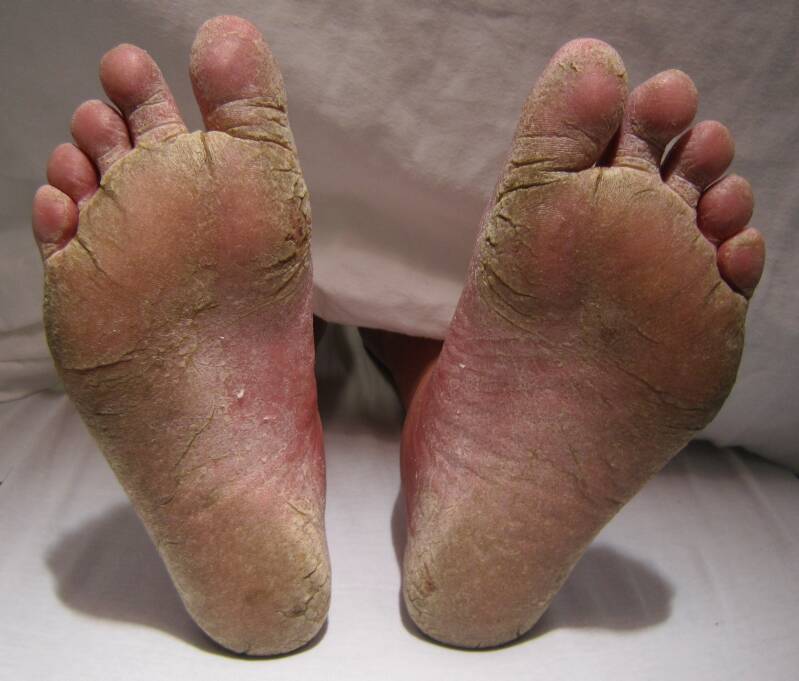
Moccasin-type tinea pedis can be less obvious because it may initially look like very dry skin.
It usually affects the sole, heel and sides of the foot in a pattern rather like a moccasin shoe.
Signs can include:
-
Dry, powdery or flaky skin
-
Fine scaling
-
Thickened skin
-
Cracking around the heel or sole
-
Mild itching
Because it can cover a larger area of the foot, people sometimes repeatedly apply moisturiser believing that they simply have dry skin.
If dry, scaly skin persists despite regular foot care, it is worth considering whether a fungal infection could be involved.
3. Vesicular Tinea Pedis
This form of athlete’s foot causes small fluid-filled blisters, known as vesicles.
They may occur on the sole, arch or sides of the foot and can sometimes appear quite suddenly.
Symptoms may include:
-
Clusters of small blisters
-
Itching
-
Burning or irritation
-
Redness around the affected area
It is important not to deliberately burst the blisters, as damaged skin can increase the risk of a secondary bacterial infection.
Blistering feet can have several different causes, so if you are unsure what you are looking at, seek professional advice rather than assuming it is fungal.
4. Acute Ulcerative Tinea Pedis
This is a more severe and less common form of tinea pedis.
The skin may become extremely inflamed, broken, weeping or ulcerated, and a secondary bacterial infection can sometimes develop.
Signs requiring prompt medical attention include increasing redness, warmth, swelling, discharge, significant pain or redness spreading beyond the original area.
This is not something to try to manage simply with home treatment, particularly if you have diabetes, poor circulation or a weakened immune system.
Can Athlete’s Foot Spread to the Toenails?
Yes.
The same types of fungi that cause athlete’s foot can infect the toenails, resulting in fungal nail infection (onychomycosis).
You may notice the nail becoming:
-
Yellow, white or brown
-
Thickened
-
Brittle or crumbly
-
Distorted
-
Difficult to cut
Likewise, an existing fungal nail infection can act as a source of fungus that contributes to repeated infections of the surrounding skin.
This is one reason recurring athlete’s foot shouldn't simply be ignored.
How is Tinea Pedis Treated?
Many uncomplicated cases can be treated with an over-the-counter antifungal preparation, such as a cream, spray or powder.
Common antifungal medicines used for athlete’s foot include terbinafine and clotrimazole. Always follow the instructions supplied with the product or ask your pharmacist which treatment is most appropriate for you.
Treatment needs to be used correctly and for the recommended length of time. Stopping as soon as the skin looks better may allow the infection to return.
If treatment isn't working, the diagnosis is uncertain, or the infection is extensive or keeps returning, speak to your pharmacist, GP or another suitably qualified healthcare professional.
Help Your Feet Stay Dry
Treating the fungus is only part of the solution. The environment around your feet matters too.
Wash your feet regularly and dry thoroughly, particularly between your toes.
Change socks every day — and more frequently if your feet become very sweaty. Choose breathable footwear where possible and allow shoes to dry properly before wearing them again.
Avoid sharing towels, socks or footwear, and wear suitable footwear in communal showers, changing rooms and pool areas.
If you regularly suffer from sweaty feet, managing the moisture can also help reduce the conditions in which fungi thrive.
What About Your Shoes?
Your shoes can remain warm and damp long after you take them off.
Try rotating footwear rather than wearing the same pair every day. Give shoes time to air and dry completely, and follow appropriate hygiene advice for footwear if you are experiencing repeated fungal infections.
Remember that treating your feet while continually putting them back into damp footwear may make managing the problem more difficult.
When Should You Seek Professional Advice?
Not every red, itchy or flaky foot is athlete’s foot.
Conditions including eczema, dermatitis and psoriasis can sometimes produce similar symptoms, so persistent skin changes shouldn't automatically be assumed to be fungal.
Seek advice if the problem is severe, painful, spreading, keeps returning, doesn't respond to appropriate treatment, or you are unsure what is causing it.
You should be particularly cautious if you have diabetes, reduced sensation, poor circulation or a weakened immune system, or if the skin is broken, hot, swollen, weeping or showing signs of infection.
Regular Foot Checks Can Make a Difference
It is very easy to overlook changes to the skin between your toes or underneath your feet, especially if bending down to inspect them is difficult.
Regular foot checks can help identify changes early — whether that's fungal-looking skin, cracking, pressure areas, corns, callus or changes to your toenails.
At Safe Steps Mobile Foot Care, I provide professional foot health assessments and routine foot care in the comfort of your own home, including advice on keeping your feet healthy between appointments.
If you are concerned about changes to the skin or nails of your feet, please get in touch.
Safe Steps Mobile Foot Care
Heidi Blades – Level 4 Foot Health Practitioner
Professional foot care in the comfort of your home.
Helping you take safe steps every day.
Add comment
Comments