

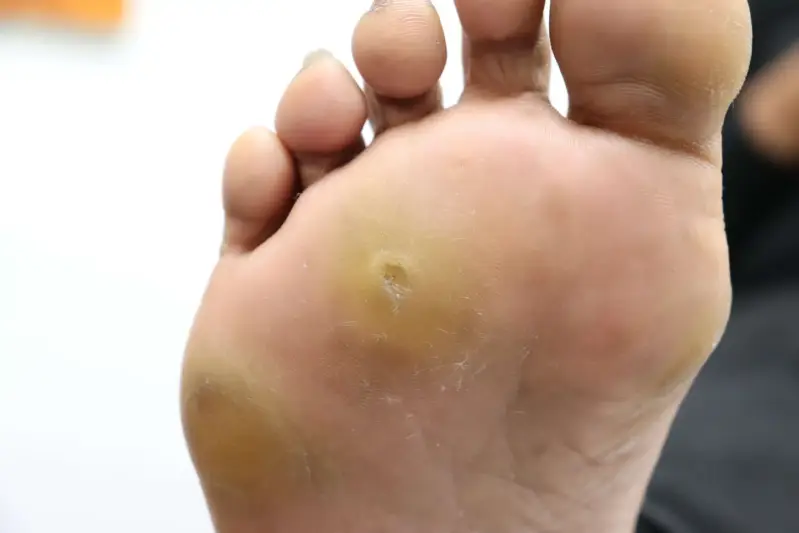
Corns: What They Are, Why They Develop and How to Keep Them at Bay
By Heidi, Safe Steps Mobile Foot Care
Have you ever felt like you’re walking on a tiny stone that’s stuck inside your shoe, only to find nothing there? That sharp, localised pain could be caused by a corn.
Corns are one of the most common foot problems I treat, and although they are usually small, they can cause a surprising amount of discomfort. The good news is that, with the right treatment and a few simple preventative measures, they can often be managed successfully.
What is a corn?
A corn is a small, concentrated area of hard skin that develops in response to repeated pressure or friction. Unlike a callus, which tends to spread over a larger area, a corn has a hard central core that presses into the deeper layers of the skin, often causing pain.
Think of it as your body’s way of trying to protect itself from constant rubbing or pressure—but unfortunately, that protection can become painful.
What causes corns?
Corns develop when the skin is repeatedly exposed to pressure or friction. Common causes include:
• Tight or poorly fitting shoes.
• High heels that place extra pressure on the front of the foot.
• Foot deformities such as bunions, hammertoes or claw toes.
• Walking barefoot regularly.
• Socks that bunch up inside shoes.
• Abnormal walking patterns or poor foot mechanics.
• Prominent bones or joints that rub against footwear.
Essentially, wherever there is repeated pressure, a corn can develop.
The different types of corns
Not all corns are the same. There are several different types, and each develops in slightly different ways.
Hard Corns (Heloma Durum)
This is the most common type of corn.
They usually appear:
• On the tops of the toes.
• Over bony joints.
• On the sides of the feet.
Hard corns have a dense central core and are often painful when direct pressure is applied.
Soft Corns (Heloma Molle)
Soft corns develop between the toes, particularly between the fourth and fifth toes.
Because this area is warm and moist, the corn remains soft and white rather than becoming hard.
Soft corns can become extremely tender due to constant rubbing between the toes.
Seed Corns
Seed corns are tiny, pinhead-sized corns that usually develop on the weight-bearing areas of the sole, particularly beneath the heel or ball of the foot.
Although they are small, they can occur in clusters and may feel like walking on tiny grains of sand.
Vascular Corns
These are less common but can be particularly painful.
Vascular corns contain small blood vessels and may bleed if they’re trimmed incorrectly. They should always be treated by a Foot Health Practitioner.
Neurovascular Corns
These are among the most painful types of corn because they contain both blood vessels and nerve tissue.
They are often extremely sensitive, making walking uncomfortable. Professional treatment is strongly recommended.
Why do corns keep coming back?
Many people are frustrated when corns return after they’ve been removed.
The truth is that removing the corn only treats the symptom. If the underlying pressure or friction remains, the body will simply produce another one.
That’s why identifying the cause is just as important as treating the corn itself.
How can you prevent corns?
The best treatment is prevention.
Wear properly fitting shoes
Shoes should:
• Have enough room for your toes.
• Not rub or squeeze your feet.
• Provide good support and cushioning.
Many corns disappear once the pressure causing them is removed.
Avoid high heels for long periods
High heels transfer much of your body weight onto the ball of the foot, increasing pressure and friction.
Wear seamless, well-fitting socks
Smooth socks help reduce rubbing inside shoes.
Use protective padding if recommended
Silicone sleeves, toe separators or cushioning pads can reduce pressure over vulnerable areas.
Look after hard skin
Callus often develops before a corn. Managing hard skin early can help prevent corns from forming.
Should you use corn plasters?
Many over-the-counter corn plasters contain strong acids designed to dissolve the hard skin.
While they may work for some people, they can also damage the healthy skin around the corn, especially if applied incorrectly.
They should never be used by people with:
• Diabetes.
• Poor circulation.
• Reduced sensation in their feet.
• Fragile skin.
If you’re unsure, it’s always safer to seek professional advice.
Can you cut corns yourself?
No.
Attempting to cut corns with scissors, blades or sharp tools can lead to injury, infection and unnecessary pain.
Even if you remove part of the corn, it is likely to return unless the underlying cause is addressed.
How can a Foot Health Practitioner help?
Professional treatment provides safe and effective relief.
During your appointment I can:
• Assess why your corn has developed.
• Safely remove the painful corn using specialist instruments.
• Reduce surrounding hard skin.
• Advise on footwear and pressure relief.
• Recommend protective padding where appropriate.
• Identify any underlying foot problems contributing to recurring corns.
• Monitor your feet if you have diabetes or poor circulation.
Many patients are surprised by how much relief they feel immediately after treatment.
When should you seek professional advice?
Arrange an appointment if:
• Your corn is painful.
• Walking becomes uncomfortable.
• The corn keeps returning.
• You notice redness, swelling or signs of infection.
• You have diabetes or poor circulation.
• You’re unsure whether it’s a corn, callus or verruca.
Early treatment often prevents a small problem from becoming much more painful.
Healthy feet start with the right care
Although corns are common, they don’t have to become a regular part of life. Choosing the right footwear, caring for your skin and seeking professional treatment when needed can keep your feet comfortable and pain-free.
Don’t ignore foot pain—your feet work hard every day and deserve the same care and attention as the rest of your body.
⸻
Need help with painful corns?
I'm Heidi, your local Foot Health Practitioner, providing professional mobile foot care throughout Diss, Attleborough, Watton, Thetford, Wymondham and all surrounding villages.
Whether you’re suffering from corns, calluses, cracked heels, thickened nails or simply need routine foot care, I provide professional treatment in the comfort of your own home.
📞 Call or WhatsApp: 07543 480171
Tinea Pedis and the Different Types
Tinea Pedis: The Different Types of Athlete’s Foot and How to Treat Them
By Heidi, Safe Steps Mobile Foot Care
When most people hear the words athlete’s foot, they picture itchy, peeling skin between the toes. But athlete’s foot — medically known as tinea pedis — can appear in several different ways.
Some types are dry and scaly, others are red and inflamed, and some can even cause small fluid-filled blisters. Because it doesn’t always look like the “classic” athlete’s foot, it can sometimes be mistaken for dry skin, eczema or other skin conditions.
Understanding the different types of tinea pedis can help you recognise the signs and take appropriate action.
What is Tinea Pedis?
Tinea pedis is a fungal infection of the skin of the feet, usually caused by a group of fungi known as dermatophytes.
These fungi thrive in warm, moist environments, which is why feet can provide the perfect conditions — particularly when they spend long periods inside socks and enclosed footwear.
The infection can also spread through contaminated floors, towels, footwear and other surfaces. Communal changing rooms, swimming pools and showers are common places where fungal infections can be picked up.
What Are the Different Types of Tinea Pedis?
There are several recognised patterns of tinea pedis, and they can look quite different.
1. Interdigital Tinea Pedis
This is probably the type most people associate with athlete’s foot.
It occurs between the toes, particularly between the fourth and fifth toes where moisture can easily become trapped.
You may notice:
-
White, soggy or peeling skin
-
Cracking or splitting between the toes
-
Itching or burning
-
Redness and irritation
-
An unpleasant smell
Keeping the area dry is particularly important because moisture encourages fungal growth.
After washing your feet, dry carefully between every toe rather than simply drying the tops and soles.
2. Moccasin-Type Tinea Pedis
Moccasin-type tinea pedis can be less obvious because it may initially look like very dry skin.
It usually affects the sole, heel and sides of the foot in a pattern rather like a moccasin shoe.
Signs can include:
-
Dry, powdery or flaky skin
-
Fine scaling
-
Thickened skin
-
Cracking around the heel or sole
-
Mild itching
Because it can cover a larger area of the foot, people sometimes repeatedly apply moisturiser believing that they simply have dry skin.
If dry, scaly skin persists despite regular foot care, it is worth considering whether a fungal infection could be involved.
3. Vesicular Tinea Pedis
This form of athlete’s foot causes small fluid-filled blisters, known as vesicles.
They may occur on the sole, arch or sides of the foot and can sometimes appear quite suddenly.
Symptoms may include:
-
Clusters of small blisters
-
Itching
-
Burning or irritation
-
Redness around the affected area
It is important not to deliberately burst the blisters, as damaged skin can increase the risk of a secondary bacterial infection.
Blistering feet can have several different causes, so if you are unsure what you are looking at, seek professional advice rather than assuming it is fungal.
4. Acute Ulcerative Tinea Pedis
This is a more severe and less common form of tinea pedis.
The skin may become extremely inflamed, broken, weeping or ulcerated, and a secondary bacterial infection can sometimes develop.
Signs requiring prompt medical attention include increasing redness, warmth, swelling, discharge, significant pain or redness spreading beyond the original area.
This is not something to try to manage simply with home treatment, particularly if you have diabetes, poor circulation or a weakened immune system.
Can Athlete’s Foot Spread to the Toenails?
Yes.
The same types of fungi that cause athlete’s foot can infect the toenails, resulting in fungal nail infection (onychomycosis).
You may notice the nail becoming:
-
Yellow, white or brown
-
Thickened
-
Brittle or crumbly
-
Distorted
-
Difficult to cut
Likewise, an existing fungal nail infection can act as a source of fungus that contributes to repeated infections of the surrounding skin.
This is one reason recurring athlete’s foot shouldn't simply be ignored.
How is Tinea Pedis Treated?
Many uncomplicated cases can be treated with an over-the-counter antifungal preparation, such as a cream, spray or powder.
Common antifungal medicines used for athlete’s foot include terbinafine and clotrimazole. Always follow the instructions supplied with the product or ask your pharmacist which treatment is most appropriate for you.
Treatment needs to be used correctly and for the recommended length of time. Stopping as soon as the skin looks better may allow the infection to return.
If treatment isn't working, the diagnosis is uncertain, or the infection is extensive or keeps returning, speak to your pharmacist, GP or another suitably qualified healthcare professional.
Help Your Feet Stay Dry
Treating the fungus is only part of the solution. The environment around your feet matters too.
Wash your feet regularly and dry thoroughly, particularly between your toes.
Change socks every day — and more frequently if your feet become very sweaty. Choose breathable footwear where possible and allow shoes to dry properly before wearing them again.
Avoid sharing towels, socks or footwear, and wear suitable footwear in communal showers, changing rooms and pool areas.
If you regularly suffer from sweaty feet, managing the moisture can also help reduce the conditions in which fungi thrive.
What About Your Shoes?
Your shoes can remain warm and damp long after you take them off.
Try rotating footwear rather than wearing the same pair every day. Give shoes time to air and dry completely, and follow appropriate hygiene advice for footwear if you are experiencing repeated fungal infections.
Remember that treating your feet while continually putting them back into damp footwear may make managing the problem more difficult.
When Should You Seek Professional Advice?
Not every red, itchy or flaky foot is athlete’s foot.
Conditions including eczema, dermatitis and psoriasis can sometimes produce similar symptoms, so persistent skin changes shouldn't automatically be assumed to be fungal.
Seek advice if the problem is severe, painful, spreading, keeps returning, doesn't respond to appropriate treatment, or you are unsure what is causing it.
You should be particularly cautious if you have diabetes, reduced sensation, poor circulation or a weakened immune system, or if the skin is broken, hot, swollen, weeping or showing signs of infection.
Regular Foot Checks Can Make a Difference
It is very easy to overlook changes to the skin between your toes or underneath your feet, especially if bending down to inspect them is difficult.
Regular foot checks can help identify changes early — whether that's fungal-looking skin, cracking, pressure areas, corns, callus or changes to your toenails.
At Safe Steps Mobile Foot Care, I provide professional foot health assessments and routine foot care in the comfort of your own home, including advice on keeping your feet healthy between appointments.
If you are concerned about changes to the skin or nails of your feet, please get in touch.
Safe Steps Mobile Foot Care
Heidi Blades – Level 4 Foot Health Practitioner
Professional foot care in the comfort of your home.
Helping you take safe steps every day.
Bunions
Bunions: Causes, Care & How a Foot Health Professional Can Help
Bunions are a common foot problem that can cause pain, pressure and difficulty finding comfortable shoes. Understanding why they happen and how to look after your feet can help prevent them becoming a bigger problem.
What are bunions?
A bunion is a bony prominence at the base of the big toe, with the big toe gradually angling towards the other toes. The area can become red, swollen or sore, particularly when footwear presses against it.
Some people have bunions without pain and may not need treatment. Others develop rubbing, corns or calluses, difficulty finding comfortable shoes, or pain around the forefoot.
How do bunions come about?
Foot structure & genetics
Foot shape and inherited characteristics can make some people more prone to developing bunions. The exact cause is not always clear.
Foot mechanics
How the foot moves and bears weight can contribute. Factors such as joint laxity and certain foot types may increase susceptibility.
Footwear
Narrow or high-heeled shoes may not be the original cause, but they can squeeze the toes, increase rubbing and make existing symptoms worse.
How can you look after a bunion?
Give your toes room
Choose shoes with a wide, deep toe box, a comfortable fit and a low heel. Adjustable fastenings can help keep the foot secure without squeezing it.
Reduce rubbing
Soft bunion pads or suitable inserts may reduce friction and pressure. Make sure any product actually feels comfortable and does not crowd the toes.
Look after the skin
Check for redness, blisters, corns or hard skin. Moisturising can help dry skin; avoid aggressively cutting or shaving skin yourself.
Manage flare-ups
Resting the foot and using a wrapped cold pack for a short period can help with soreness. A pharmacist can advise on suitable pain relief for you.
How can a foot health practitioner help?
A suitably qualified foot health practitioner or podiatrist can assess the bunion, the surrounding skin and nails, footwear, pressure areas and how the foot functions. They can then help you build a practical plan around your symptoms.
Footwear advice
Help you choose footwear that gives the forefoot enough width and depth and reduces pressure over the bunion.
Skin & pressure care
Where within their scope of practice, they can manage corns and callus and advise on padding or pressure relief.
Assessment & onward referral
They can identify when symptoms need further assessment and may advise you to see a GP, podiatrist or other clinician.
Chilblains
Chilblains: What They Are, How to Treat Them and When to See a Foot Health Professional
Chilblains are small, itchy or painful patches that can develop on the toes and feet after exposure to cold temperatures. Although they are usually harmless and disappear on their own, they can be uncomfortable and, in some cases, become broken, infected or particularly troublesome.
If you regularly suffer from cold feet or recurring chilblains, understanding why they happen and how to look after your feet can help prevent them from becoming a bigger problem.
What are chilblains?
Chilblains, also known as pernio, are a reaction of the small blood vessels in the skin to changes in temperature. They commonly appear on the toes, fingers, heels and other extremities.
They may look like small red, purple or swollen patches on the skin. You may also experience:
- Itching or burning
- Tenderness or pain
- Swelling
- A change in skin colour
- Dry or cracked skin
- Blisters in more severe cases
For most people, chilblains settle within a few weeks, particularly when the affected area is kept warm and protected.
How do chilblains come about?
Interestingly, chilblains are not simply caused by having cold feet. They can occur when cold skin is warmed too quickly.
When your feet become cold, the small blood vessels constrict to help conserve heat. If the feet are then warmed rapidly, the surrounding blood vessels may not respond quickly enough, causing blood to leak into the surrounding tissues. This can result in the characteristic swelling, redness and irritation associated with chilblains.
They are more common during colder weather and can be particularly troublesome for people whose feet become cold easily.
Poor circulation, smoking, low body weight and spending prolonged periods in cold conditions may increase the risk. Some underlying medical conditions can also cause circulation problems or make chilblains more likely.
How can you treat chilblains?
The good news is that most chilblains can be managed with simple measures.
Keep your feet warm — but warm them gradually
Wear warm, comfortable socks and properly fitting footwear. Avoid placing cold feet directly against a radiator, hot-water bottle or other intense heat source. Gradual warming is important, particularly if your feet are numb, because you may not immediately realise that the heat is too intense.
Look after your skin
Keeping the skin moisturised can help prevent dryness and cracking. A suitable foot moisturiser can be applied regularly, avoiding areas where the skin is broken.
Do not scratch chilblains, even if they are itchy, as this can damage the skin and potentially introduce infection.
Keep moving
Gentle movement and regular activity can help maintain circulation. If you spend long periods sitting down, try moving your feet and ankles regularly.
Don't ignore broken skin
If a chilblain becomes blistered or the skin breaks, keep the area clean and protected. Avoid applying products to an open wound unless they are appropriate for that purpose.
When should you see a Foot Health Professional?
Although many chilblains resolve without professional treatment, a Foot Health Professional (FHP) can be useful if you are experiencing recurring or particularly uncomfortable problems.
Consider making an appointment if:
- Your chilblains keep coming back.
- They are particularly painful or uncomfortable.
- The skin has cracked or broken.
- You have developed a blister or wound.
- You are concerned about changes to the skin on your feet.
- You are unsure whether the problem is actually a chilblain.
- You have difficulty caring for your feet yourself.
A FHP can examine your feet, provide appropriate foot-care advice and help you establish a routine to reduce the risk of future problems. Where appropriate, they can also advise you when you should seek further assessment from your GP or another healthcare professional.
When should you seek medical advice?
If a chilblain does not improve, becomes increasingly painful, develops signs of infection or keeps recurring, it is important to seek medical advice. This is particularly important if you have a condition that affects circulation, sensation or healing, such as diabetes.
Signs that may indicate infection include increasing redness, warmth, swelling, worsening pain or discharge from the affected area.
Prevention is better than cure
If you are prone to chilblains, start thinking about prevention before the cold weather arrives. Keep your feet comfortably warm, choose footwear that fits properly and avoid allowing your feet to become extremely cold.
Remember that warm does not mean hot. Rapidly heating cold feet can make the problem worse and can potentially damage the skin.
Looking after your feet this winter
Chilblains may seem like a minor winter irritation, but persistent or recurring problems shouldn't simply be ignored. Taking care of your feet throughout the colder months can help protect your skin and keep you comfortable.
End of holiday season footcare
End of Summer Feet – Time to Give Your Feet Some TLC! 👣☀️
By Heidi, Safe Steps Mobile Foot Care
Can you believe summer is nearly over? After months of sandals, flip-flops, bare feet, sunshine, swimming and hopefully plenty of walking, your feet may be showing the signs of a busy summer!
While we often spend time looking after our skin and hair during the summer months, our feet can easily get forgotten.
So, as summer draws to a close, it’s the perfect time to give your feet a little attention before we head into autumn.
What Has Summer Done to Your Feet?
Wearing sandals and flip-flops can mean your feet are exposed to the elements more than usual. Heat, sun, dust and dry air can all contribute to dry skin and cracked heels.
Walking barefoot can also lead to thicker areas of hard skin as your feet naturally try to protect themselves.
And then there are those flip-flops! Although handy for the beach and around the pool, wearing them for long periods or walking long distances can leave your feet tired, sore and unsupported.
Give Your Feet a Post-Summer Check
Take a good look at your feet and check for:
• Dry or cracked heels
• Thick or uncomfortable hard skin
• Corns or areas of pressure
• Blisters or sore spots
• Changes to your toenails
• Peeling or irritated skin
• Any new verrucas or areas of concern
If something has appeared during the summer and isn’t improving, don’t simply put it down to wearing sandals.
Time to Moisturise!
Now is a great time to get back into a regular foot-care routine.
Apply a good foot cream regularly, concentrating on dry areas and heels. Keeping the skin supple can help prevent it becoming excessively dry and cracked as the weather starts to change.
Remember – moisturiser is best kept away from the spaces between your toes.
Get Those Toenails Back in Shape
Summer sandals often mean our toenails have been on display for weeks!
If your nails have become long, thick, difficult to cut or uncomfortable, now is a good time to have them professionally trimmed and reduced.
Avoid cutting nails too short or digging down the sides, as this can cause problems such as ingrowing toenails.
Start Thinking About Autumn Footwear
Before you put your summer sandals away, have a look at your autumn shoes and boots.
Are they still comfortable? Do they fit properly? Have they become worn or damaged?
Don’t wait until the first cold, wet day to discover your favourite boots are causing rubbing or pressure!
And Don’t Forget… There’s Still Time for a Late Holiday!
If you’re lucky enough to be planning a late summer or early autumn break, don’t forget your feet!
A last-minute holiday can mean your feet suddenly go from wearing sandals around the garden to walking miles sightseeing, exploring or relaxing around the pool.
Give them some preparation beforehand – particularly if you have corns, hard skin, thickened nails or other foot problems that could become uncomfortable while you’re away.
A Little Foot TLC Goes a Long Way
Your feet have carried you through another summer, so why not give them a little reward?
A professional foot-health appointment can help get your feet feeling comfortable and cared for again, ready for the change of season.
At Safe Steps Mobile Foot Care, I provide professional foot health treatments in the comfort of your own home, helping you keep your feet healthy, comfortable and looking their best throughout the year.
Don’t wait for your feet to become a problem – give them a little TLC now!
Sweaty Feet
Sweaty Feet – Why Do They Happen, and What Can You Do About Them?
By Heidi, Safe Steps Mobile Foot Care
Sweaty feet are something many people experience, yet few feel comfortable talking about. While a little perspiration is perfectly normal, excessively sweaty feet can become uncomfortable, cause unpleasant odours and increase your risk of developing other foot problems.
The good news is that, in most cases, sweaty feet can be managed with a few simple changes to your daily routine.
At Safe Steps Mobile Foot Care, I regularly help people manage foot conditions caused by excessive sweating, helping them stay comfortable, confident and active.
What Causes Sweaty Feet?
Your feet contain around 250,000 sweat glands—more than any other part of your body.
Sweating helps regulate body temperature, but sometimes these glands become overactive, producing more sweat than is needed. This condition is known as plantar hyperhidrosis.
Why Do Feet Sweat?
There are many reasons why your feet may sweat more than normal.
Common causes include
Naturally overactive sweat glands
- Hot weather
- Wearing non-breathable footwear
- Synthetic socks
- Stress and anxiety
- Hormonal changes
- Exercise and physical activity
- Certain medications
- Medical conditions such as hyperhidrosis
Often, several of these factors occur together.
Who Is Most at Risk?
Sweaty feet can affect anyone but are more common in:
- Teenagers and young adults
- People who wear safety boots or work shoes for long periods
- Sportsmen and women
- Individuals who spend many hours on their feet
- People who naturally perspire heavily
- Those living in warmer climates
What Problems Can Sweaty Feet Cause?
Excess moisture creates the perfect environment for bacteria and fungi to thrive.
Over time this can lead to:
- Unpleasant foot odour
- Athlete’s foot
- Fungal nail infections
- Softened skin between the toes
- Blisters
- Skin irritation
- Increased friction inside shoes
- Cracked skin
- Greater risk of infection
The longer moisture remains trapped inside footwear, the greater the chance of these problems developing.
Why Do Sweaty Feet Smell?
Interestingly, sweat itself has very little smell.
The unpleasant odour develops when bacteria naturally present on the skin break down sweat and dead skin cells, producing the characteristic foot odour.
Keeping the feet clean and dry is the best way to reduce this.
Can Sweaty Feet Be Prevented?
In many cases, yes. Small changes to your daily routine can make a significant difference.
Wear Breathable Footwear
Choose shoes made from leather, mesh or other breathable materials.
Avoid wearing the same pair every day. Giving shoes 24 hours to dry out between wears allows moisture to evaporate.
Choose the Right Socks
Wear moisture-wicking socks made from bamboo, wool or specialist technical fabrics.
If your feet sweat heavily, changing your socks during the day can help.
Wash Your Feet Daily
Wash your feet thoroughly using warm water and mild soap.
Take particular care to clean between the toes.
Dry Your Feet Properly
Always dry between each toe after washing.
Moisture trapped between the toes encourages fungal infections such as athlete’s foot.
Use Foot Powders or Antiperspirants
Specialist foot powders and antiperspirants designed for feet can help reduce sweating and absorb excess moisture.
Treatment Options
Treatment depends on how severe the sweating has become.
Improve Foot Hygiene
Regular washing, drying and moisturising (avoiding between the toes) help maintain healthy skin.
Change Footwear Regularly
Alternating shoes allows them to dry thoroughly between uses.
Treat Any Infections Promptly
If athlete’s foot or a fungal nail infection develops, early treatment can prevent the problem from worsening.
Medical Advice
If excessive sweating is affecting your daily life or causing repeated infections, your GP may recommend stronger antiperspirants or other treatments.
Sweaty Feet and Diabetes
If you have diabetes, excessive sweating should not be ignored.
Moist skin is more prone to breakdown, fungal infections and bacterial infections. Reduced sensation means these problems may go unnoticed until they become more serious.
Regular diabetic foot checks are an important part of keeping your feet healthy.
When Should You Seek Professional Help?
It’s a good idea to seek advice if you notice:
- Persistent excessive sweating
- Strong foot odour despite good hygiene
- Recurrent athlete’s foot
- Repeated fungal nail infections
- Cracked or damaged skin
- Blisters that keep returning
- You have diabetes and notice any changes to your feet
Early treatment is often much simpler than dealing with complications later.
Safe Steps Mobile Foot Care
At Safe Steps Mobile Foot Care, I provide professional foot care in the comfort of your own home. Whether you’re struggling with sweaty feet, athlete’s foot, fungal nails, corns, callus, cracked heels or diabetic foot care, treatment is always tailored to your individual needs.
Healthy feet start with healthy skin. Keeping your feet clean, dry and well cared for can help prevent many common foot problems and keep you comfortable every day.
If excessive sweating is affecting your confidence or causing recurring foot problems, don’t ignore it—help is available. Healthy feet really do make a difference to your quality of life.
Plantar Fasciitis
Plantar Fasciitis – Why Does Your Heel Hurt, and What Can You Do About It?
By Heidi, Safe Steps Mobile Foot Care
Have you ever stepped out of bed in the morning and felt a sharp pain in your heel with your very first step? Or perhaps you’ve noticed heel pain after sitting for a while that gradually eases as you walk?
If so, you may be suffering from plantar fasciitis – one of the most common causes of heel pain.
Although plantar fasciitis can be extremely painful, the good news is that most people improve with the right treatment and advice.
At Safe Steps Mobile Foot Care, I regularly see patients who are experiencing heel pain. While plantar fasciitis isn’t something I treat directly, I can help identify the problem and refer you to a physiotherapist or podiatrist who can provide specialist treatment if appropriate.
What Is Plantar Fasciitis?
The plantar fascia is a thick, strong band of tissue that runs from your heel bone to the base of your toes. It acts like a supportive ligament, helping to maintain the arch of your foot and absorb the impact of walking.
When this tissue becomes irritated or overloaded, tiny tears can develop, leading to inflammation and pain. This condition is known as plantar fasciitis.
Despite its name, recent research suggests the condition is often more of a degenerative change in the tissue rather than inflammation alone, particularly when symptoms have been present for several months.
What Does Plantar Fasciitis Feel Like?
Symptoms commonly include:
• Sharp pain underneath the heel
• Pain during the first few steps in the morning
• Heel pain after sitting for a period of time
• Pain after long periods of standing
• Discomfort after exercise rather than during it
• Tenderness when pressing the inside of the heel
Many people describe the pain as feeling like they’re walking on a stone or drawing pin.
What Causes Plantar Fasciitis?
There isn’t usually one single cause. Instead, it often develops because the plantar fascia is placed under repeated strain.
Common causes include:
• Standing for long periods
• Sudden increases in walking or exercise
• Running on hard surfaces
• Poorly supportive footwear
• Tight calf muscles
• Tight Achilles tendons
• Flat feet
• High arches
• Carrying excess body weight
• Occupations that involve prolonged standing
Who Is Most at Risk?
Plantar fasciitis is more common in:
• Adults between 40 and 60 years of age
• Runners
• People who spend all day on their feet
• Healthcare workers
• Teachers
• Retail workers
• People who are overweight
• Individuals with tight calf muscles
What Problems Can Plantar Fasciitis Cause?
Without treatment, plantar fasciitis can become a long-term problem.
Possible complications include:
• Persistent heel pain
• Difficulty walking comfortably
• Reduced mobility
• Altered walking pattern (which can lead to knee, hip or back pain)
• Reduced participation in exercise
• Ongoing discomfort affecting everyday activities
Can Plantar Fasciitis Be Prevented?
Although it can’t always be prevented, there are several ways to reduce your risk.
Wear Supportive Footwear
Choose shoes with:
• Good arch support
• Cushioned soles
• A supportive heel
• Proper shock absorption
Avoid worn-out shoes that no longer provide adequate support.
Stretch Regularly
Gentle stretching of the calf muscles and plantar fascia can help maintain flexibility.
Increase Activity Gradually
Avoid suddenly increasing your walking, running or exercise routine.
Maintain a Healthy Weight
Reducing unnecessary pressure on the feet can significantly decrease strain on the plantar fascia.
Replace Running Shoes Regularly
If you’re a runner, worn footwear may contribute to heel pain.
Treatment Options
Treatment often focuses on reducing strain on the plantar fascia while allowing the tissue to recover.
Treatment may include:
Stretching Exercises
Specific exercises for the plantar fascia and calf muscles are often one of the most effective treatments.
Footwear Advice
Supportive footwear can make a significant difference.
Orthotic Insoles
Some people benefit from specialist insoles prescribed by a podiatrist to improve foot mechanics and reduce strain.
Physiotherapy
A physiotherapist can assess how your feet, ankles and lower limbs are functioning and provide targeted exercises, manual therapy and advice to aid recovery.
Pain Relief
Your GP or pharmacist may advise suitable pain relief or anti-inflammatory medication if appropriate.
In more persistent cases, a podiatrist or specialist may discuss additional treatment options.
When Should You Seek Professional Help?
It’s a good idea to seek advice if you notice:
• Heel pain lasting more than a few weeks
• Pain that’s getting worse
• Difficulty walking
• Pain that affects your daily activities
• Swelling, redness or significant bruising
• You have diabetes or another medical condition affecting your feet
The earlier plantar fasciitis is assessed, the sooner appropriate treatment can begin.
How Can Safe Steps Mobile Foot Care Help?
Although I don’t provide treatment for plantar fasciitis itself, I can assess your feet, discuss your symptoms and help determine whether your heel pain may be caused by plantar fasciitis or another foot condition.
If I believe plantar fasciitis is the likely cause, I will recommend referral to a physiotherapist or podiatrist, who can provide specialist assessment and treatment.
If you’re also experiencing hard skin, corns, thickened nails or other foot health concerns alongside your heel pain, I can help manage those as part of your overall foot care.
Safe Steps Mobile Foot Care
At Safe Steps Mobile Foot Care, I provide professional foot care in the comfort of your own home. Whether you’re struggling with corns, callus, thickened nails, cracked heels, diabetic foot care or simply want to keep your feet healthy, every treatment is tailored to your individual needs.
If you’re experiencing persistent heel pain, don’t ignore it. Early assessment and the right referral can make a significant difference, helping you get back to walking comfortably and enjoying your everyday activities.
Hammer Toes
Hammer Toes – Why Do Toes Curl, and What Can You Do About Them?
Have you noticed one or more of your toes beginning to curl, bend or rub against your shoes? You may have a condition commonly known as a hammer toe. While it often starts as a minor inconvenience, if left untreated it can become painful, affect your balance, and make everyday walking uncomfortable.
At Safe Steps Mobile Foot Care, I regularly help people manage painful hammer toes in the comfort of their own homes. Understanding what causes them and taking action early can make a huge difference.
What Is a Hammer Toe?
A hammer toe is a deformity where one or more of the smaller toes bend abnormally at one or more joints instead of lying flat. Over time, the muscles, tendons and ligaments that normally keep the toe straight become imbalanced, causing the toe to remain in a bent position.
The condition most commonly affects the second toe but can also involve the third, fourth or even fifth toe.
The Different Types of Curled Toes
Although many people refer to them all as “hammer toes,” there are actually several different types.
Hammer Toe
The middle joint (the proximal interphalangeal joint) bends downwards, giving the toe its characteristic hammer-like appearance. This is the most common type.
Mallet Toe
Only the joint nearest the tip of the toe bends downwards, causing the end of the toe to point towards the floor.
Claw Toe
Both the middle and end joints bend, causing the toe to curl under. Claw toes often affect several toes at once and are commonly associated with nerve or muscle conditions.
What Causes Hammer Toes?
There isn’t usually a single cause. Instead, several factors often work together.
Common causes include:
• Wearing shoes that are too tight or have a narrow toe box
• High-heeled shoes that force the toes forwards
• Bunions changing the position of the toes
• Flat feet or very high arches
• Arthritis affecting the joints
• Previous foot injuries
• Muscle imbalance
• Diabetes or neurological conditions affecting the nerves and muscles
• Genetics – some people simply inherit foot shapes that make hammer toes more likely
Who Is Most at Risk?
Hammer toes are more common in:
• Adults over 50
• Women (often due to footwear choices)
• People with bunions
• Those with arthritis
• Diabetic patients
• People who spend long periods standing
• Anyone with poorly fitting footwear
What Problems Can Hammer Toes Cause?
Initially, a hammer toe may simply look unusual. However, as it progresses it can lead to:
• Pain when walking
• Difficulty finding comfortable shoes
• Corns on the tops of the toes
• Hard skin on pressure points
• Pain beneath the ball of the foot
• Inflamed joints
• Blisters from rubbing
• Reduced balance and stability
• Increased risk of falls in older adults
If left untreated, the toe may eventually become rigid and impossible to straighten without surgery.
Can Hammer Toes Be Prevented?
In many cases, yes—especially if treatment begins while the toe is still flexible.
Helpful preventative measures include:
Choose Appropriate Footwear
Wear shoes with:
• A wide, deep toe box
• Low heels
• Soft uppers
• Plenty of room for your toes to move naturally
Avoid shoes that squeeze your toes together.
Keep Your Feet Strong
Simple toe exercises can help maintain flexibility:
• Picking up a towel with your toes
• Marble pickups
• Gentle toe stretches
• Toe spreading exercises
Protect Pressure Areas
Silicone toe sleeves or toe separators may reduce rubbing and help improve comfort.
Maintain Healthy Feet
Regular foot care helps identify problems early before they become more severe.
Treatment Options
Treatment depends on how advanced the hammer toe has become.
Professional Foot Care
A Foot Health Practitioner can:
• Remove painful corns and hard skin
• Reduce pressure areas
• Advise on footwear
• Recommend protective padding
• Monitor changes over time
• Help improve comfort and mobility
Footwear Advice
Sometimes simply changing footwear significantly reduces pain and prevents the condition from worsening.
Orthotic Insoles
In some cases, orthotic insoles may help improve foot mechanics and reduce excessive pressure.
Stretching and Exercises
If the toe is still flexible, daily exercises may help maintain movement and reduce stiffness.
Surgery
If the toe becomes rigid and very painful, surgery may be recommended by an orthopaedic foot surgeon or podiatrist. Surgery aims to straighten the toe and relieve pain when conservative treatments are no longer effective.
Hammer Toes and Diabetes
If you have diabetes, hammer toes deserve extra attention.
The curled position of the toes increases pressure, making corns, blisters and ulcers more likely. Reduced sensation means injuries may go unnoticed, increasing the risk of infection.
Regular diabetic foot checks and prompt treatment of any pressure areas are extremely important.
When Should You Seek Professional Help?
It’s a good idea to seek advice if you notice:
• A toe beginning to curl
• Pain when walking
• Corns or hard skin repeatedly returning
• Difficulty finding comfortable shoes
• Redness, swelling or inflammation
• Any wound that isn’t healing
• You have diabetes and notice changes in your toes
Early treatment is usually much simpler than waiting until the toe becomes permanently fixed.
Safe Steps Mobile Foot Care
At Safe Steps Mobile Foot Care, I provide professional foot care in the comfort of your own home. Whether you’re struggling with painful hammer toes, corns, callus, thickened nails or diabetic foot care, treatment is always tailored to your individual needs.
Early intervention can help reduce discomfort, improve mobility and keep you walking comfortably for years to come.
Healthy feet really do make a difference to your quality of life. If your toes are beginning to curl or become painful, don’t ignore them—help is available.
Diabetes and Footcare
Diabetes and Foot Care: Why Looking After Your Feet Could Save More Than Your Mobility
By Heidi, Safe Steps Mobile Foot Care
Living with diabetes means looking after your health in many different ways, but one area that’s often overlooked is your feet. Yet, diabetes can have a significant impact on foot health, and even a small cut, blister or ingrowing toenail can quickly become a serious problem if left untreated.
The good news is that with regular foot checks, good daily care and professional foot treatment, most diabetic foot complications can be prevented.
Why does diabetes affect your feet?
High blood sugar levels over time can damage the nerves and blood vessels that keep your feet healthy. This can lead to two common complications:
Peripheral Neuropathy (Nerve Damage)
Diabetes can damage the nerves in your feet, reducing your ability to feel pain, heat or injury.
This means you may not notice:
- A blister from a new pair of shoes.
- A small cut or scratch.
- A stone in your shoe.
- A burn from hot sand or a hot water bottle.
- A developing corn or callus.
Without pain to alert you, these minor injuries can worsen before you realise there’s a problem.
Poor Circulation (Peripheral Arterial Disease)
Diabetes can also reduce blood flow to your feet.
Healthy circulation is essential because it delivers oxygen and nutrients needed for healing. Poor circulation means wounds take longer to heal and are more likely to become infected.
Why are diabetic feet more at risk?
When reduced sensation and poor circulation occur together, the risk of foot complications increases significantly.
Something as small as a cracked heel or a blister can develop into a foot ulcer if not treated promptly.
This is why people with diabetes are advised to check their feet every day and attend regular foot assessments.
What should you look out for?
It’s important to examine your feet daily. If you struggle to see the soles of your feet, use a mirror or ask someone to help.
Check for:
- Cuts or grazes.
- Blisters.
- Redness.
- Swelling.
- Corns or calluses.
- Cracked heels.
- Ingrowing toenails.
- Thickened or fungal nails.
- Changes in skin colour.
- New pain or discomfort.
- Areas that feel unusually warm.
- Any discharge or unpleasant smell.
Even if something seems minor, it’s always better to have it checked.
Never ignore these warning signs
Seek medical advice immediately if you notice:
- An open wound or ulcer.
- Blackened skin.
- Increasing redness.
- Swelling.
- Pus or discharge.
- A foot that feels hot to the touch.
- Sudden pain or swelling.
- A cut that isn’t healing.
- Fever alongside a foot wound.
Prompt treatment can prevent serious complications.
How can you protect your feet?
Looking after diabetic feet doesn’t need to be complicated. Small daily habits can make a huge difference.
Check your feet every day
Look for anything unusual, even if it doesn’t hurt.
Wash your feet daily
Use warm (not hot) water and dry carefully, especially between the toes.
Always test the water temperature with your elbow or hand if you have reduced sensation.
Moisturise your skin
Dry skin can crack, creating an entry point for bacteria.
Apply a moisturising foot cream every day, but avoid putting cream between the toes, where excess moisture can encourage fungal infections.
Wear well-fitting footwear
Choose shoes that:
- Fit properly.
- Have plenty of room for your toes.
- Protect your feet from injury.
- Don’t rub or create pressure points.
Always check inside your shoes before putting them on to make sure there are no small stones, loose stitching or objects that could damage your feet.
Never walk barefoot
Even around the house, it’s safer to wear supportive slippers or shoes to reduce the risk of injury.
Trim nails carefully
Cut nails straight across without cutting into the corners.
If your nails are thick, difficult to manage or your eyesight isn’t as good as it once was, it’s much safer to have them professionally cared for.
Why is professional foot care so important?
Many diabetic foot problems begin with something small that could have been treated easily if spotted early.
As a Foot Health Practitioner, I can:
- Carry out regular foot assessments.
- Safely trim toenails.
- Reduce painful hard skin and calluses.
- Treat corns.
- Monitor changes in your feet over time.
- Recognise early warning signs of potential problems.
- Offer advice on footwear and daily foot care.
- Recommend when referral to your GP or podiatry team is needed.
Regular appointments can help identify problems before they become serious.
Should you use corn plasters or sharp tools?
If you have diabetes, the answer is no.
Avoid:
- Corn plasters containing acid.
- Razor blades.
- Foot graters with blades.
- Trying to cut corns or hard skin yourself.
- Digging out ingrowing toenails.
These can cause injuries that may be slow to heal and increase the risk of infection.
The importance of early intervention
Many serious diabetic foot complications begin with something that seemed insignificant—a small blister, a crack in the skin or an unnoticed ingrowing toenail.
The earlier a problem is identified and treated, the better the outcome is likely to be.
Regular professional foot care, combined with daily self-checks, is one of the best ways to keep your feet healthy, comfortable and active.
Healthy feet help you stay independent
Your feet carry you through every stage of life. If you have diabetes, taking a few extra minutes each day to care for them can help prevent complications and keep you mobile for years to come.
Remember, prevention is always better than cure, and seeking professional advice early could make all the difference.
⸻
Caring for diabetic feet in the comfort of your own home
I’m Heidi, your local Foot Health Practitioner, providing professional mobile foot care throughout Diss, Attleborough, Watton, Thetford, Wymondham and all surrounding villages.
I offer gentle, professional diabetic foot care, routine nail care, treatment for corns, calluses, cracked heels and thickened nails, along with regular foot health assessments—all in the comfort of your own home.
📞 Call or WhatsApp: 07543 480171
Your feet deserve expert care. If you have diabetes, don’t wait until a small problem becomes a serious one. Regular professional foot care can help keep you safe, comfortable and confidently on your feet.
Thickened/Fungal Toe Nails
Fungal Toenails: Causes, Prevention and Treatment
By Heidi, Safe Steps Mobile Foot Care
Fungal toenails are a very common condition, particularly as we get older. While they are rarely dangerous, they can be unsightly, difficult to manage and, in some cases, uncomfortable or even painful.
Many people ignore the early signs, hoping the problem will disappear on its own. Unfortunately, fungal nail infections rarely clear without treatment and often worsen over time.
The good news is that with the right care and advice, fungal nails can often be managed successfully.
What is a fungal nail infection?
A fungal nail infection (also known as Onychomycosis) occurs when microscopic fungi invade the nail through tiny cracks or breaks in the nail or surrounding skin.
The infection usually starts at the edge of the nail and gradually spreads underneath it, causing the nail to change colour, thicken and become brittle.
Toenails are far more commonly affected than fingernails because fungi thrive in the warm, dark and often damp environment inside our shoes.
How do fungal nail infections develop?
Fungal spores are present almost everywhere in our environment, but they only cause an infection when they find the right conditions to grow.
Common ways you can pick up a fungal nail infection include:
• Walking barefoot around swimming pools or communal changing rooms.
• Wearing damp socks or shoes for long periods.
• Sharing nail clippers or footwear.
• Having untreated athlete’s foot.
• Small injuries or trauma to the n
• Wearing tight-fitting footwear that damages the nail.
Often, people don’t even realise when the infection first begins.
Who is most at risk?
Although anyone can develop fungal nails, they are more common in:
• Older adults.
• People with diabetes.
• Those with poor circulation.
• People who suffer from athlete’s foot.
• Regular swimmers.
• Gym users.
• Runners and sports enthusiasts.
• Anyone whose feet sweat excessively.
As we age, nails naturally grow more slowly, making it easier for fungal infections to become established.
Signs and symptoms
Fungal nail infections often develop slowly. You may notice:
• Yellow, white or brown discolouration.
• Thickened nails.
• Brittle or crumbly edges.
• Nails lifting away from the nail bed.
• Distorted nail shape.
• A dull or rough appearance.
• An unpleasant smell in severe cases.
• Pain when wearing shoes if the nail becomes very thick.
Not every thickened nail is caused by fungus, which is why professional assessment is important.
Can fungal nails spread?
Yes.
Fungal nail infections can spread:
• To your other toenails.
• To your fingernails.
• To other members of your household.
• To the skin, causing athlete’s foot.
Early treatment can help prevent the infection from spreading further.
How can you prevent fungal nails?
There are several simple ways to reduce your risk.
Keep your feet clean and dry
Wash your feet daily and dry carefully between each toe.
Change your socks every day
Fresh socks help reduce moisture, which fungi thrive on.
Wear breathable footwear
Choose shoes that allow air to circulate and avoid wearing the same pair every day if possible. Let shoes dry out thoroughly before wearing them again.
Wear flip-flops in communal areas
Swimming pools, leisure centres and communal showers are common places where fungal infections can spread.
Treat athlete’s foot promptly
Athlete’s foot is one of the biggest risk factors for developing fungal nail infections.
Don’t share nail equipment
Keep your nail clippers, files and foot care tools for your own personal use.
How are fungal nails treated?
Treatment depends on how advanced the infection is.
Professional nail reduction
One of the most effective ways to improve comfort is by professionally reducing the thickness of the infected nail. This relieves pressure inside footwear and allows topical treatments to penetrate more effectively.
Antifungal nail treatments
Prescription or pharmacy antifungal lacquers and solutions can help, particularly when treatment begins early. They usually need to be applied consistently for several months.
Oral antifungal medication
For more severe infections, your GP may prescribe oral antifungal tablets. These treatments can be very effective but are not suitable for everyone and may require monitoring.
Good nail care
Keeping the nail trimmed and thinned by a Foot Health Practitioner helps improve comfort and supports other treatments.
It’s important to remember that toenails grow very slowly. Even after successful treatment, it can take 12 to 18 months for a healthy new nail to fully grow through.
Can you treat fungal nails with home remedies?
You may hear about remedies such as vinegar soaks, tea tree oil or other natural treatments. While some people report improvement, there is limited scientific evidence that these methods cure fungal nail infections.
If you suspect a fungal infection, seeking professional advice is usually the best place to start.
How can a Foot Health Practitioner help?
During your appointment I can:
• Assess whether your nail changes are likely to be fungal.
• Professionally reduce thickened nails.
• Improve comfort when walking.
• Advise on the most appropriate treatment options.
• Help prevent the infection from worsening.
• Provide guidance on reducing the risk of recurrence.
• Recommend when you should see your GP for further assessment or prescription treatment.
Many patients tell me they feel immediate relief once thickened fungal nails have been professionally reduced.
When should you seek professional advice?
You should seek advice if:
• Your nail becomes painful.
• The nail is becoming increasingly thick.
• Several nails are affected.
• The infection keeps returning.
• You have diabetes or poor circulation.
• You’re unsure whether the nail changes are caused by fungus.
Early treatment often produces the best results and helps prevent long-term damage to the nail.
Looking after your feet
Healthy toenails are an important part of healthy feet. Taking action early, practising good foot hygiene and seeking professional advice can help keep your nails comfortable, healthy and easier to manage.
⸻
Need help with fungal toenails?
I’m Heidi, your local Foot Health Practitioner, providing professional mobile foot care throughout Diss, Attleborough, Watton, Thetford, Wymondham and all surrounding villages.
Whether you’re dealing with fungal nails, thickened toenails, corns, calluses or simply need routine foot care, I provide professional treatment in the comfort of your own home.
📞 Call or WhatsApp: 07543 480171
Corns
Corns: What They Are, Why They Develop and How to Keep Them at Bay
By Heidi, Safe Steps Mobile Foot Care
Have you ever felt like you’re walking on a tiny stone that’s stuck inside your shoe, only to find nothing there? That sharp, localised pain could be caused by a corn.
Corns are one of the most common foot problems I treat, and although they are usually small, they can cause a surprising amount of discomfort. The good news is that, with the right treatment and a few simple preventative measures, they can often be managed successfully.
What is a corn?
A corn is a small, concentrated area of hard skin that develops in response to repeated pressure or friction. Unlike a callus, which tends to spread over a larger area, a corn has a hard central core that presses into the deeper layers of the skin, often causing pain.
Think of it as your body’s way of trying to protect itself from constant rubbing or pressure—but unfortunately, that protection can become painful.
What causes corns?
Corns develop when the skin is repeatedly exposed to pressure or friction. Common causes include:
• Tight or poorly fitting shoes.
• High heels that place extra pressure on the front of the foot.
• Foot deformities such as bunions, hammertoes or claw toes.
• Walking barefoot regularly.
• Socks that bunch up inside shoes.
• Abnormal walking patterns or poor foot mechanics.
• Prominent bones or joints that rub against footwear.
Essentially, wherever there is repeated pressure, a corn can develop.
The different types of corns
Not all corns are the same. There are several different types, and each develops in slightly different ways.
Hard Corns (Heloma Durum)
This is the most common type of corn.
They usually appear:
• On the tops of the toes.
• Over bony joints.
• On the sides of the feet.
Hard corns have a dense central core and are often painful when direct pressure is applied.
Soft Corns (Heloma Molle)
Soft corns develop between the toes, particularly between the fourth and fifth toes.
Because this area is warm and moist, the corn remains soft and white rather than becoming hard.
Soft corns can become extremely tender due to constant rubbing between the toes.
Seed Corns
Seed corns are tiny, pinhead-sized corns that usually develop on the weight-bearing areas of the sole, particularly beneath the heel or ball of the foot.
Although they are small, they can occur in clusters and may feel like walking on tiny grains of sand.
Vascular Corns
These are less common but can be particularly painful.
Vascular corns contain small blood vessels and may bleed if they’re trimmed incorrectly. They should always be treated by a Foot Health Practitioner.
Neurovascular Corns
These are among the most painful types of corn because they contain both blood vessels and nerve tissue.
They are often extremely sensitive, making walking uncomfortable. Professional treatment is strongly recommended.
Why do corns keep coming back?
Many people are frustrated when corns return after they’ve been removed.
The truth is that removing the corn only treats the symptom. If the underlying pressure or friction remains, the body will simply produce another one.
That’s why identifying the cause is just as important as treating the corn itself.
How can you prevent corns?
The best treatment is prevention.
Wear properly fitting shoes
Shoes should:
• Have enough room for your toes.
• Not rub or squeeze your feet.
• Provide good support and cushioning.
Many corns disappear once the pressure causing them is removed.
Avoid high heels for long periods
High heels transfer much of your body weight onto the ball of the foot, increasing pressure and friction.
Wear seamless, well-fitting socks
Smooth socks help reduce rubbing inside shoes.
Use protective padding if recommended
Silicone sleeves, toe separators or cushioning pads can reduce pressure over vulnerable areas.
Look after hard skin
Callus often develops before a corn. Managing hard skin early can help prevent corns from forming.
Should you use corn plasters?
Many over-the-counter corn plasters contain strong acids designed to dissolve the hard skin.
While they may work for some people, they can also damage the healthy skin around the corn, especially if applied incorrectly.
They should never be used by people with:
• Diabetes.
• Poor circulation.
• Reduced sensation in their feet.
• Fragile skin.
If you’re unsure, it’s always safer to seek professional advice.
Can you cut corns yourself?
No.
Attempting to cut corns with scissors, blades or sharp tools can lead to injury, infection and unnecessary pain.
Even if you remove part of the corn, it is likely to return unless the underlying cause is addressed.
How can a Foot Health Practitioner help?
Professional treatment provides safe and effective relief.
During your appointment I can:
• Assess why your corn has developed.
• Safely remove the painful corn using specialist instruments.
• Reduce surrounding hard skin.
• Advise on footwear and pressure relief.
• Recommend protective padding where appropriate.
• Identify any underlying foot problems contributing to recurring corns.
• Monitor your feet if you have diabetes or poor circulation.
Many patients are surprised by how much relief they feel immediately after treatment.
When should you seek professional advice?
Arrange an appointment if:
• Your corn is painful.
• Walking becomes uncomfortable.
• The corn keeps returning.
• You notice redness, swelling or signs of infection.
• You have diabetes or poor circulation.
• You’re unsure whether it’s a corn, callus or verruca.
Early treatment often prevents a small problem from becoming much more painful.
Healthy feet start with the right care
Although corns are common, they don’t have to become a regular part of life. Choosing the right footwear, caring for your skin and seeking professional treatment when needed can keep your feet comfortable and pain-free.
Don’t ignore foot pain—your feet work hard every day and deserve the same care and attention as the rest of your body.
⸻
Need help with painful corns?
I'm Heidi, your local Foot Health Practitioner, providing professional mobile foot care throughout Diss, Attleborough, Watton, Thetford, Wymondham and all surrounding villages.
Whether you’re suffering from corns, calluses, cracked heels, thickened nails or simply need routine foot care, I provide professional treatment in the comfort of your own home.
📞 Call or WhatsApp: 07543 480171
Ingrowing Toenails
By Heidi, Safe Steps Mobile Foot Care
An ingrowing toenail can start as a small annoyance but quickly become extremely painful if left untreated. Something as simple as putting on your shoes or walking the dog can become uncomfortable, and in some cases the nail can even become infected.
The good news is that most ingrowing toenails can be successfully treated, and there are simple steps you can take to help prevent them from returning.
What is an ingrowing toenail?
An ingrowing toenail (also known as an ingrown toenail) occurs when the edge or corner of the nail grows into the surrounding skin instead of over it.
Although it can affect any toe, it most commonly develops on the big toe.
As the nail presses into the skin, the body reacts as if it’s a foreign object, leading to pain, inflammation and sometimes infection.
Why do ingrowing toenails happen?
There are several reasons why an ingrowing toenail may develop.
Cutting nails too short
One of the most common causes is trimming the toenails too short or rounding off the corners. This encourages the nail to grow into the skin as it grows back.
Tight footwear
Shoes that squeeze the toes together place constant pressure on the nail, increasing the risk of it growing into the surrounding skin.
Injury
Dropping something heavy on your toe, stubbing it, or repeated pressure from running or certain sports can damage the nail and alter the way it grows.
Naturally curved nails
Some people simply have naturally curved or fan-shaped nails, making them more prone to ingrowing edges.
Thickened nails
As we age, or due to fungal nail infections, nails can become thicker and harder to cut, increasing the chance of them growing incorrectly.
Poor foot care
Leaving nails too long or attempting to dig down the sides of the nail yourself can make the problem much worse.
Signs and symptoms
An ingrowing toenail often develops gradually. Symptoms may include:
• Pain along one or both sides of the nail.
• Tenderness when wearing shoes.
• Redness and swelling.
• Warmth around the toe.
• Bleeding or discharge.
• Infection with pus.
• Excess tissue growing around the nail (known as proud flesh).
If left untreated, an ingrowing toenail can become increasingly painful and may lead to a more serious infection.
Who is more at risk?
Anyone can develop an ingrowing toenail, but it is more common in:
• Teenagers and young adults.
• People who wear tight-fitting footwear.
• Runners and athletes.
• People with naturally curved nails.
• Older adults with thickened nails.
• People with diabetes or poor circulation.
How can you prevent ingrowing toenails?
A few simple habits can make a big difference.
Cut your nails correctly
Always cut toenails:
• Straight across.
• Not too short.
• Without rounding the corners.
If you’re unsure, your Foot Health Practitioner can do this safely for you.
Wear shoes that fit properly
Choose footwear with:
• Plenty of room for your toes.
• Good support.
• A wide toe box if possible.
Your toes should never feel squeezed together.
Keep your feet clean
Wash and dry your feet daily, paying particular attention between the toes.
Avoid picking at the nail
Trying to dig out the corner yourself often makes the problem worse and increases the risk of infection.
Seek treatment early
The earlier an ingrowing toenail is treated, the easier it usually is to resolve.
What should you do if you have one?
If your toe is sore but not infected:
• Soak your foot in warm salty water for 10–15 minutes.
• Dry it thoroughly.
• Wear open-toed or wider footwear where possible.
• Avoid cutting down the sides of the nail.
If the area becomes swollen, hot, starts discharging pus or becomes increasingly painful, seek professional advice promptly.
How can a Foot Health Practitioner help?
Professional treatment can provide fast relief and help prevent recurring problems.
During your appointment I can:
• Assess the cause of the problem.
• Carefully remove the offending section of nail where appropriate.
• Reduce pressure on the nail.
• Clean and dress the area if needed.
• Provide advice on preventing future ingrowing nails.
• Recommend when further medical treatment or referral may be necessary.
Many patients tell me they wish they had sought help sooner, as relief is often immediate once the pressure has been removed.
A special note for people with diabetes
If you have diabetes, poor circulation or reduced sensation in your feet, never attempt to treat an ingrowing toenail yourself.
Even a small wound can develop into a more serious problem. It’s always best to seek professional advice as soon as you notice redness, swelling or pain.
Looking after your feet
Your feet carry you through life, and small problems can quickly become much bigger if ignored. Regular foot care and early treatment can help keep you active, comfortable and pain-free.
⸻
Need help with an ingrowing toenail?
I’m Heidi, your local Foot Health Practitioner, providing professional mobile foot care throughout Diss, Attleborough, Watton, Thetford, Wymondham and all surrounding villages.
Whether you’re suffering from an ingrowing toenail, corns, calluses, thickened nails or simply need routine foot care, I’m here to help in the comfort of your own home.
📞 Call or WhatsApp: 07543 480171